Blog
Published on 30/01/2026
OTT Platforms: How They Work, Why They Matter, and How to Leverage Them in 2026
At Vodevolution, we see every day how this model has become essential for organizations aiming to build a direct, long-term relationship with their audience.
What Are OTT Platforms?
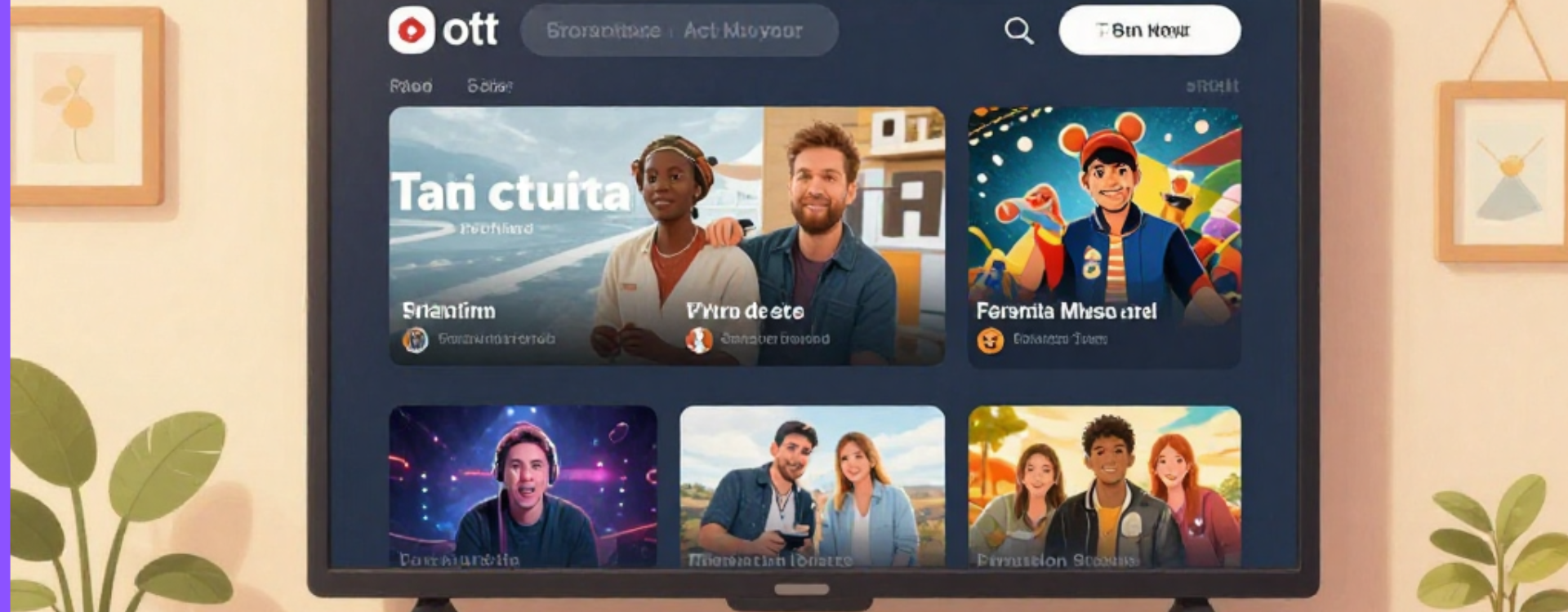
An OTT platform is a system that distributes video content including films, TV series, live events, and digital programming directly via the Internet, reaching users across devices such as smartphones, tablets, smart TVs, and desktop computers.
There is no need for traditional broadcast networks or pay-TV operators. Distribution is internet-first, scalable, and adaptable to modern consumption habits.
Well-known examples include Netflix, Disney+, Amazon Prime Video, and Globoplay, as well as many niche and vertical platforms dedicated to education, sports, local media, corporate communication, and live events.
Why OTT Platforms Are Strategic Today

OTT platforms represent more than a technical solution — they signal a structural shift in video distribution and monetization.
Global Reach
OTT services are not constrained by geographic boundaries. Content can be accessed anywhere there is an internet connection, on virtually any modern device.
Personalized User Experience
Viewers no longer follow rigid schedules. Consumption is on-demand, personalized, and user-driven, resulting in higher engagement and satisfaction.
Flexible Monetization Models
OTT platforms support multiple revenue strategies, including:
Subscription-based models (SVOD)
Advertising-supported models (AVOD)
Transactional models (TVOD)
Hybrid combinations of the above
This flexibility allows businesses to design sustainable and market-specific monetization strategies.
Data-Driven Insights
Unlike traditional media, OTT platforms provide real-time analytics. Companies gain visibility into who is watching, what content performs best, viewing duration, and device usage — enabling continuous optimization of both content and business strategy.
How an OTT Platform Works: The Technology Ecosystem
A successful OTT service is not just an app or a website; it is a structured ecosystem composed of interconnected components:
Content Ingestion and Encoding
Video assets must be prepared, encoded into multiple formats, and optimized for distribution across different devices and network conditions.
Content Delivery and CDN
Content is distributed through Content Delivery Networks (CDNs) to ensure performance, scalability, and low latency at peak traffic times.
Player and User Experience
A reliable video player and intuitive interface are critical. Consistent UX across devices directly impacts retention and engagement.
Monetization and Billing
Payment systems, subscription management, ad insertion, and revenue tracking are central to sustaining the platform financially.
Analytics and Personalization
Recommendation engines and behavioral analytics help keep users engaged longer and improve lifetime value through personalization.
Key Challenges in OTT Development
Despite its advantages, building and managing an OTT platform presents several challenges:
Scalability
The platform must handle large volumes of concurrent users without compromising performance.
Content Security and DRM
Protecting content from piracy and unauthorized access is a fundamental requirement.
Cross-Device Consistency
User experience must remain seamless across smart TVs, mobile devices, tablets, and web browsers.
Rights Management
Licensing, territorial restrictions, and content rights management require robust backend systems and operational discipline.
Opportunities for Broadcasters, Enterprises, and Media Companies
OTT platforms unlock new growth opportunities well beyond traditional entertainment.
Niche and Local Channels
Regional broadcasters, brands, sports organizations, and institutions can launch targeted platforms to serve specific audiences and communities.
FAST and AVOD Models
FAST (Free Ad-Supported Streaming TV) services are gaining momentum globally, combining the familiarity of linear TV with digital advertising efficiency.
Corporate and Educational Video
OTT platforms are increasingly used for internal training, onboarding, corporate communication, and continuous learning — offering full control over content and data.
The Future of OTT Platforms
OTT is not a trend it is a long-term transformation of the media industry.
As connectivity improves, connected devices multiply, and user expectations rise, video consumption will continue to shift toward direct, digital, and data-driven platforms.
Organizations that successfully integrate technology, content, analytics, and user experience will gain a lasting competitive advantage.
Conclusion
OTT platforms represent one of the most powerful tools available today for reaching audiences in a direct, scalable, and personalized way.
For broadcasters, enterprises, and content owners, investing in OTT means:
- expanding reach across devices,
- enabling flexible monetization,
- leveraging actionable data,
- building stronger relationships with end users.
At Vodevolution, we believe the future of video distribution is digital, integrated, and experience-driven and OTT platforms are at the center of that evolution.